

%201.svg)


The Complexity of IoT Ecosystems
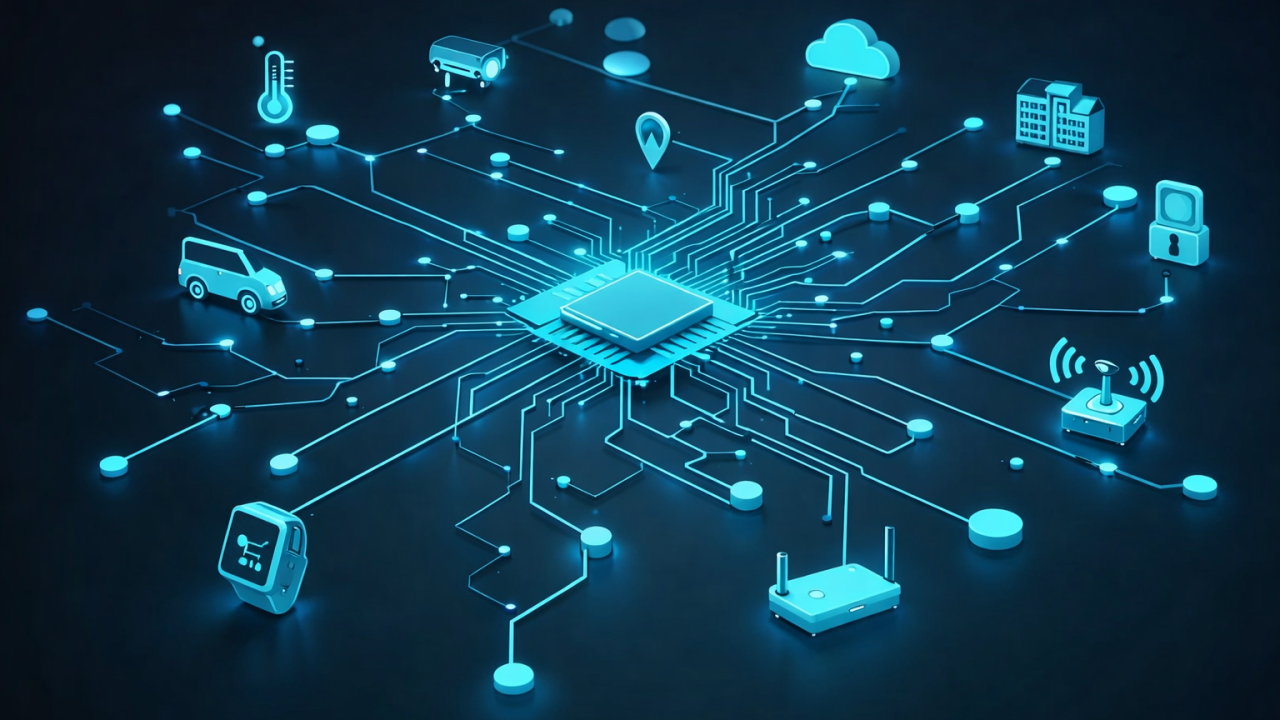
The Internet of Things (IoT) is an inherently complex system spanning multiple layers of hardware, firmware, software, connectivity, cloud infrastructure, data analytics, and application management. Within each of these layers, there are many types of service providers, and within each type, numerous vendors offering their own technologies and solutions.
At the hardware level, manufacturers produce sensors, gateways, SIMs, and communication modules. Connectivity is typically provided by network operators and specialist IoT connectivity providers. At the backend, IoT platform, cloud service, and middleware providers focus on ensuring data is securely and reliably delivered to the cloud. Providers specialising in the application of IoT data range from generalist platforms to analytics providers and specialised device management solutions. In addition to these roles, integrators and installers also play an important role in the delivery of IoT systems.
Fragmentation in the IoT Market
Taken together, the sheer number and range of roles and technologies involved highlights just how complex modern IoT systems are. This broad scope is what allows IoT to connect digital systems with the built environment, but it also makes it extremely difficult for one organisation to deliver every component of a solution. As a result of this inherent interdisciplinarity, most vendors focus on one specific part of the system rather than providing a robust, end-to-end offering. End-to-end service providers therefore remain relatively uncommon in the IoT space, and delivering a single IoT solution often requires the involvement of multiple providers.
As early as 2019, there were more than 630 IoT vendors globally, each offering proprietary platforms, systems, and equipment. These vendors operate within their own technical constraints and organisational standards, often designing systems that prioritise their own ecosystems over interoperability with others. Providers and manufacturers frequently aim for their solutions to be the dominant technology, making them less inclined to conform to alternative systems.
These divisions are further exacerbated by the absence of a universal IoT framework or standard. Without shared guidelines for interoperability, alignment across providers becomes increasingly difficult. The result is a highly fragmented value chain in which integrating disparate technologies requires significant additional effort, cost, and expertise, ultimately leaving organisations with IoT systems that are more complex, more expensive, and less effective.
Integration Challenges in Multi-Vendor IoT Systems
Organizations are often required to adopt multi-vendor IoT solutions, which can introduce a range of challenges including security risks, interoperability issues, increased costs, and operational efficiencies. One of the most immediate and prevalent challenges in multi-vendor environments is integration. Since the IoT market lacks uniformity, as a result, the systems deployed are often highly fragmented. Devices, platforms, and technologies are frequently built using proprietary hardware, standards, and operating systems that are not designed to work with external technologies. As a result, many IoT solutions are assembled from components that were never intended to operate together in a cohesive system and must instead be forced to integrate through additional layers of technical modification.
Fragility and System Instability
Organizations are often required to adopt multi-vendor IoT solutions, which can introduce a range of challenges including security risks, interoperability issues, increased costs, and operational efficiencies. One of the most immediate and prevalent challenges in multi-vendor environments is integration. Since the IoT market lacks uniformity, as a result, the systems deployed are often highly fragmented. Devices, platforms, and technologies are frequently built using proprietary hardware, standards, and operating systems that are not designed to work with external technologies. As a result, many IoT solutions are assembled from components that were never intended to operate together in a cohesive system and must instead be forced to integrate through additional layers of technical modification.
Data and device integration therefore in and of itself requires additional time, expertise, and financial investment. Integration is typically achieved through the development of custom APIs that connect each of the different devices and platforms, enabling them to properly communicate. While this approach can be effective, it is highly tailored to specific devices and software versions. As systems evolve over time, these rigid integrations can become fragile and less effective. Updates introduced by one vendor, like firmware changes, platform updates, or feature releases, can unintentionally disrupt how components interact with one another. This can destabilize the IoT system, leading to unexpected failures or degraded performance that require intervention and maintenance to resolve. Since integrations must be continuously monitored and maintained, interoperability becomes an ongoing operational challenge that continues beyond the initial integration. Over time, this reliance on custom integration introduces broader challenges regarding security, system management, and scalability.
Security Risks in Multi-Vendor IoT Environments
IoT systems are already complex, and a multi-vendor approach broadens this, introducing multiple security models, protocols, and configurations into a single environment. Each vendor may implement security differently, using varying authentication methods, encryption standards and access controls. These differences create inconsistencies across the system that introduce gaps that can be exploited. This means the overall security of the entire system is only as strong as its weakest component. Custom integrations expand the attack surface introducing additional entry points that must be secured and maintained. In fragmented environments, security responsibility is also divided among multiple vendors, reducing visibility. As a result security risks are more likely to go unnoticed, persist for longer, or fall between organizational boundaries. As a result, when breaches do occur, they are more difficult to trace, contain, and resolve. The weakened security systems of multi-vendor solutions increases the risk of breach and exposure of sensitive data and critical information.
Operational and Troubleshooting Challenges
Fragmentation not only increases security risk, it also makes day-to-day system management and troubleshooting significantly more difficult. In multi-vendor IoT environments, organizations are required to work with multiple providers for different parts of the system, essentially leaving them responsible for the management of the entire solution as well as resolving issues when they arise.
As previously discussed, multi-vendor systems are more prone to ongoing issues, which increases the need for continuous oversight and troubleshooting. When problems arise, organizations must often navigate multiple vendors to simply identify the root cause. This fragmented responsibility leads to delayed resolutions, prolonged downtime, and higher costs due to lost productivity and repairs. In many cases, vendors are unable to assist when issues span across multiple systems, leaving the users to diagnose and resolve the problems themselves, even when they lack the necessary expertise.
The ongoing management of multi-vendor IoT systems often requires organizations to allocate dedicated IT resources to handle integrations, maintain interoperability between systems, and address security risks. Over time, the cumulative impact of constant troubleshooting, coordination, and system oversight significantly increases operational costs. In multi-vendor IoT environments, the end user effectively has to become both the system manager and primary troubleshooter, often compromising their budget and time.
Scalability Limitations of Multi-Vendor IoT Solutions
Finally, scalability is a major limitation of major-vendor IoT solutions. Each additional device increases system complexity, requiring new integrations and ongoing maintenance across vendors. When looking to scale up their IoT systems, organizations are often faced with costly upgrades. In some cases, solutions can become so difficult to manage that organizations are required to replace them entirely. When scaling requires a full system replacement, much of the original investment is lost, resulting in a significant reduction or complete loss of return on investment. Rather than enabling growth, fragmented multi-vendor architectures can ultimately limit scalability and undermine long-term value of IoT systems.
The Case for Single-Vendor IoT Solutions
For these reasons, end-to-end solutions are often preferred over multi-vendor approaches, even though they remain relatively uncommon. By consolidating responsibility within a single provider, single-vendor solutions reduce complexity and create a more cohesive system.
One of the primary advantages of a single-vendor approach is the seamless integration. Platforms, devices, software, and firmware are specifically designed to work together, reducing integration issues and ensuring ongoing reliable communication across the system. This not only minimises initial deployment challenges, but also reduces the likelihood of issues that arise further along during system updates, technological changes, or new feature rollouts. As a result, the risk of system instability is significantly reduced in a one-vendor solution.
When issues do arise, a single-vendor model provides a clear operational benefit because there is a single point of contact and accountability. Users are able to work with one expert provider who has full visibility of the system, enabling faster identification and resolution, ultimately limiting downtime. This consolidated responsibility also strengthens security. Uniform security protocols and centralized monitoring reduce the occurrence of vulnerabilities and make it easier to identify and address risks in a timely and coordinated manner.
Scalability is another key advantage as single-vendor systems build growth into the platform architecture, allowing additional devices and features to be added without introducing more complexity. Rather than requiring costly re-configuration and re-integration, scaling can occur in a controlled and predictable way. This can help organizations to build upon existing systems, preserve performance, and manage long-term costs.
Finally, a single-vendor solution shifts responsibility for ongoing system management and coordination away from the end user and back to the lone provider. With end-to-end visibility and control, the provider is positioned to solely manage system health, updates, and any issues that may arise. This greatly reduces the operational burden placed on users and allows them to focus on their outcomes rather than their IoT infrastructure.
Overall, single-vendor IoT solutions simplify deployment, strengthen security, improve scalability, and reduce operational costs and overhead. By removing fragmentation and centralising responsibility, these types of systems offer a more efficient, resilient, and cost-effective foundation for long-term monitoring and IoT success.