

%201.svg)


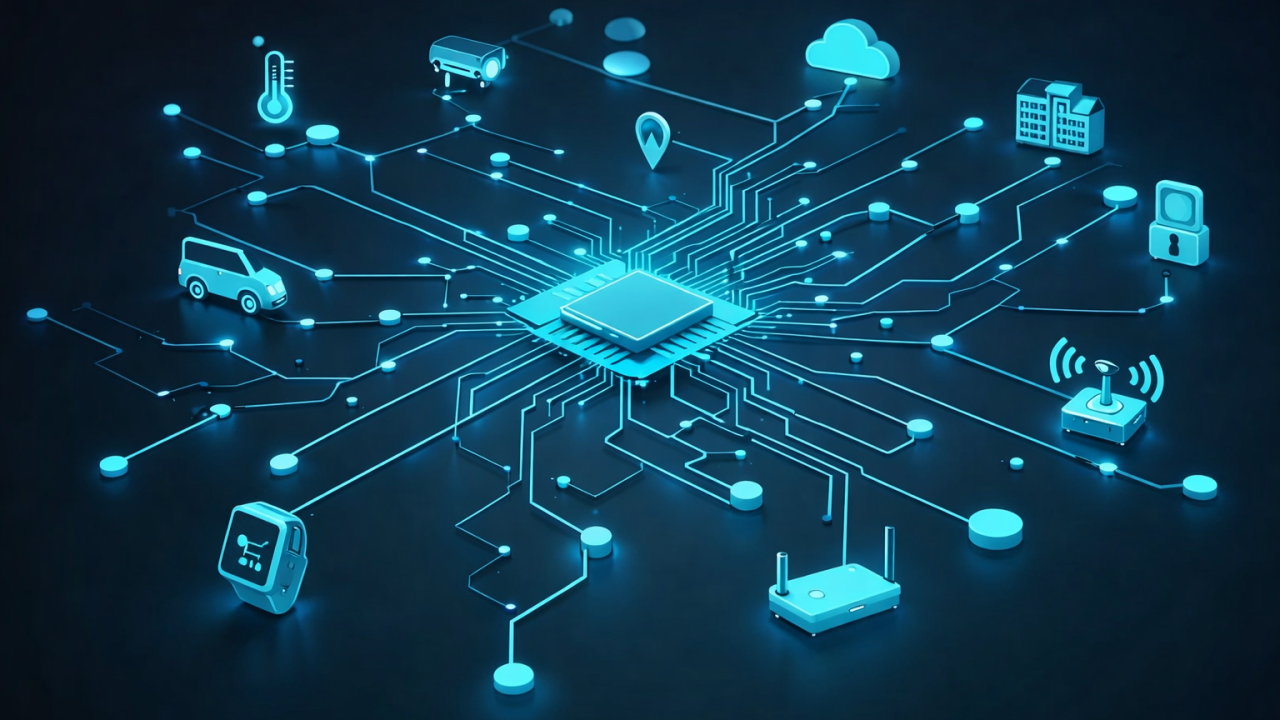
The traditional IoT architecture of sending all data to the cloud for processing is being challenged by a revolutionary approach: edge computing. By moving computation closer to where data is generated, edge computing is transforming how IoT systems operate, making them faster, more efficient, and more reliable.
Edge computing refers to processing data at or near the location where it's generated, rather than sending it to a centralized cloud server. In IoT contexts, this means equipping devices, local gateways, or nearby servers with the computational power to analyze data in real-time.
Edge computing isn't a single solution but rather a spectrum of approaches:
The Problem with Cloud Processing:
Edge Computing Solution:
Traditional IoT Challenges:
Edge Benefits:
Data Protection Advantages:
Offline Capabilities:
Predictive Maintenance:
Edge Device → Real-time Vibration Analysis → Immediate Alert
Traditional: Device → Cloud → Analysis → Alert (seconds/minutes)
Edge: Device → Local Analysis → Alert (milliseconds)
Quality Control:
Critical Decision Making:
Traffic Management:
Public Safety:
Patient Monitoring:
Edge Processors:
Edge Gateways:
Container Technologies:
Edge AI Platforms:
Questions to Consider:
Device-Level Processing:
Gateway-Level Processing:
Local Edge Servers:
Data Flow Architecture:
Devices → Edge Processing → Filter/Aggregate → Cloud
         ↓
    Local Actions     Historical Analysis
    Real-time         Machine Learning
    Decisions         Long-term Storage
Edge-Specific Security Considerations:
Distributed System Challenges:
Solutions:
Limited Computing Power:
Maintaining Consistency:
5G and Edge:
AI at the Edge:
Edge-to-Edge Communication:
Standardization Efforts:
Ecosystem Development:
Begin with pilot projects to understand requirements and challenges before full-scale deployment.
Prioritize applications where edge computing provides measurable benefits:
Develop strategies for:
Implement comprehensive monitoring to:
Edge computing is not just a technological trend—it's a fundamental shift in how we architect IoT systems. By bringing intelligence closer to the source of data, organizations can achieve faster response times, reduce costs, improve reliability, and enhance security.
The key to successful edge computing implementation lies in understanding your specific requirements and choosing the right balance between edge and cloud processing. As the technology continues to mature, we can expect even more powerful and accessible edge computing solutions.
The future of IoT is at the edge, where real-time intelligence meets physical-world applications. Organizations that embrace this paradigm shift will be better positioned to leverage the full potential of their IoT investments.