

%201.svg)


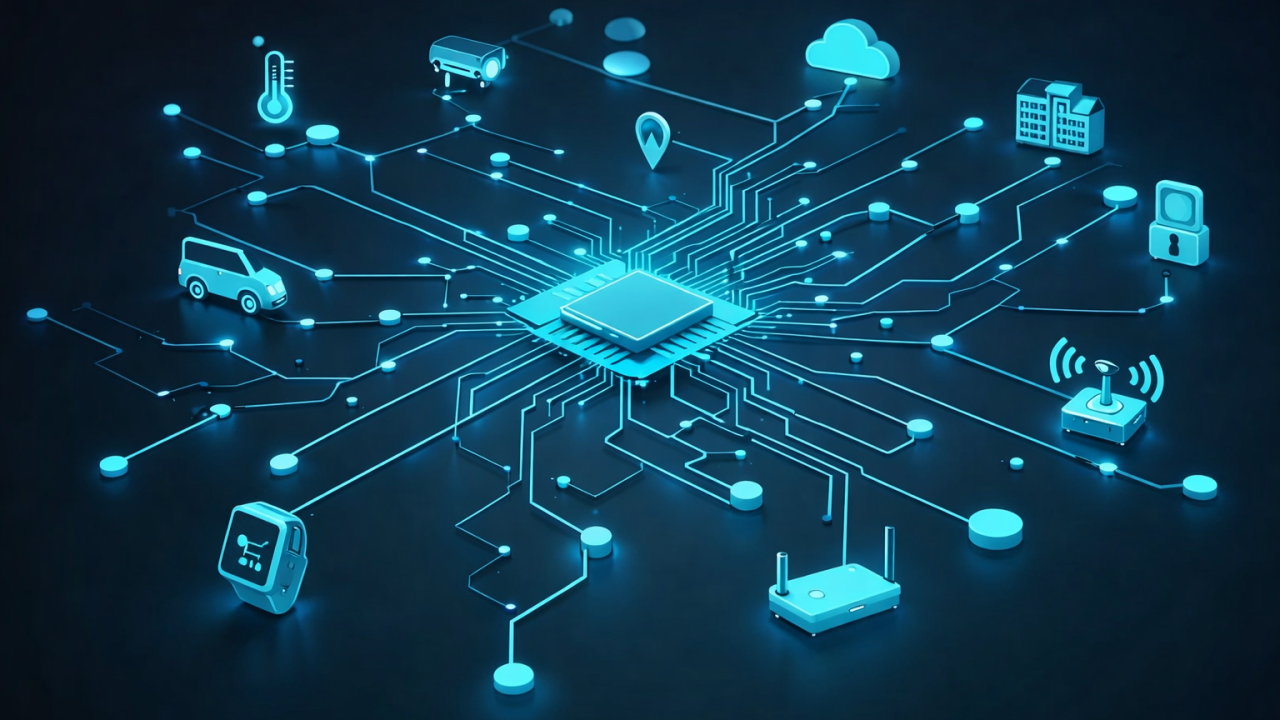
The Fourth Industrial Revolution is here, and at its heart lies Industrial IoT (IIoT). Manufacturing companies worldwide are leveraging connected devices, real-time data analytics, and intelligent automation to create smart factories that are more efficient, productive, and profitable than ever before.
This transformation isn't just about adding sensors to existing equipment—it's about fundamentally reimagining how manufacturing operations work in the digital age.
Industrial IoT differs from consumer IoT in several critical ways:
Reliability Requirements:
Scale and Complexity:
Security Considerations:
Operational Efficiency:
Cost Reduction:
Revenue Growth:
Typical IIoT ROI Example:
Initial Investment: $2M
Annual Savings:
- Maintenance: $400K
- Energy: $300K
- Quality: $250K
- Efficiency: $350K
Total Annual Benefits: $1.3M
Payback Period: 18 months
3-Year ROI: 195%
Traditional Approach:
IIoT-Enabled Approach:
Implementation:
# Example: Vibration Analysis for Predictive Maintenance
import numpy as np
from sklearn.ensemble import IsolationForest

class PredictiveMaintenance:
    def __init__(self):
        self.model = IsolationForest(contamination=0.1)

    def analyze_vibration(self, vibration_data):
        # Feature extraction
        features = self.extract_features(vibration_data)

        # Anomaly detection
        anomaly_score = self.model.decision_function([features])

        # Maintenance recommendation
        if anomaly_score < -0.5:
            return "Schedule maintenance within 24 hours"
        elif anomaly_score < -0.2:
            return "Monitor closely, maintenance may be needed"
        else:
            return "Equipment operating normally"
Automated Quality Assurance:
Benefits:
Smart Inventory Systems:
Operational Improvements:
Smart Energy Systems:
Typical Results:
Sensors and Actuators:
Communication Protocols:
Industrial Networks:
Edge Computing:
Industrial Data Platforms:
Analytics and AI:
Common Challenges:
Solutions:
OT Security Risks:
Security Framework:
┌─────────────────────────────────────────────┐
│              Security Layers                │
├─────────────────────────────────────────────┤
│  Application Security (Authentication)     │
├─────────────────────────────────────────────┤
│  Network Security (Segmentation, VPN)      │
├─────────────────────────────────────────────┤
│  Device Security (Certificates, TPM)       │
├─────────────────────────────────────────────┤
│  Physical Security (Access Control)        │
└─────────────────────────────────────────────┘
Organizational Challenges:
Success Strategies:
Digital twins are virtual replicas of physical assets, processes, or systems that use real-time data to mirror their physical counterparts.
Components:
Product Development:
Process Optimization:
Asset Management:
Intelligent Manufacturing:
Integration Points:
Lights-Out Manufacturing:
Current State Analysis:
Strategy Development:
Proof of Concept:
Key Metrics:
Factory-wide Rollout:
Advanced Features:
Continuous Improvement:
Operational Metrics:
Financial Metrics:
Quality Metrics:
Real-time Dashboards:
Regular Reviews:
Emerging Capabilities:
Advanced Connectivity:
Green Manufacturing:
Focus on specific business problems and measurable outcomes rather than technology for its own sake.
Executive sponsorship is critical for overcoming organizational resistance and securing necessary resources.
Provide comprehensive training and support to help employees adapt to new technologies and processes.
Design systems that can grow and evolve with your business needs and technological advances.
Implement comprehensive security measures from the beginning rather than as an afterthought.
Industrial IoT transformation represents one of the most significant opportunities for manufacturing companies to improve their competitiveness and profitability. While the journey requires significant investment and change management, the potential benefits—including cost reduction, quality improvement, and new revenue opportunities—make it essential for long-term success.
The key to successful IIoT implementation lies in taking a strategic approach that aligns technology investments with business objectives, addresses organizational challenges, and builds capabilities for continuous improvement.
Companies that embrace this transformation today will be the industry leaders of tomorrow, equipped with the intelligent, connected operations needed to thrive in an increasingly competitive global marketplace.