

%201.svg)


Hong Kong Fire
At around 3:00 pm on 25 November, emergency services in Hong Kong received the first report that a high-rise building in the Tai Po district was on fire. By 5:00 pm, four fatalities had already been confirmed. At 6:30 pm, authorities had escalated the incident to a Level Five fire alarm, the highest classification under the Hong Kong system. About 30 minutes later, at approximately 7:00 pm, the fire had spread to seven of the eight towers within the residential complex. At the time of writing, the disaster has claimed 128 lives, and over 200 residents remain unaccounted for. These events have prompted the question of how this fire was able to spread with such speed and on such a devastating scale.
The fire occurred at the Wang Fuk Court housing complex, which was undergoing extensive renovations at the time. The complex consists of eight 311-story residential towers containing nearly 2,000 apartments and housing more than 4,600 residents. The fire originated on all lower-level scaffolding nets located on the westernmost tower but spread rapidly across the site. This rapid spread was largely attributed to the combustible renovation materials enveloping the buildings. The use of bamboo scaffolding, combined with the flammable green construction mesh, created a continuous external fuel pathway for the flames. Styrofoam boards had reportedly been used to block windows in some flats, which then enabled flames to penetrate apartments more easily and ignite entire corridors. Once ignited, the construction mesh behaved like other highly combustible synthetic materials, melting, dripping, and behaving like liquid fire being blown about by the wind. This perfect storm of continuous vertical pathways, combustible materials, and numerous opportunities for ignition created the conditions in which the fire spread rapidly. It ascended multiple floors within minutes and crossed between towers, moving at a pace that overwhelmed both internal fire systems and external firefighting efforts. The result was significant structural damage and extensive loss of life.
Dangers of Combustible Cladding
The scale of the Hong Kong tragedy is extraordinary, yet the underlying mechanism for how the fire spread so rapidly is not unique. In fact, a building does not even need to be under renovation to face an equivalent risk. A similar scenario can arise in structures incorporating combustible cladding: facades that contain highly flammable materials, such as polyethylene-cored aluminum composite panels. Buildings of this type can create similar conditions to the scaffolding in Hong Kong. Once ignited, the cladding provides a continuous externally located fuel source that allows flames to travel up the exterior of a building at a speed that far exceeds the speed in which firefighters or internal safety systems are able to respond.
Combustible cladding became popularized from the 1970s through the early 2000s as a cost-effective, visually appealing way to modernize buildings. However, the legacy of this design preference has left tens of thousands of buildings worldwide at risk of serious disasters. In the United Kingdom alone, official data indicates more than 10,000 high-rise and medium-rise buildings require assessment or remediation due to unsafe facade materials. Similar issues have been documented in Australia, the Middle East, Europe, and Asia. Furthermore, these materials are commonly found on residential towers, hotels, hospitals, and university buildings. The routine occupation of these spaces by thousands of people poses a direct and significant threat to many lives.
Dubai Cladding Fires
The occurrence of cladding-fueled fires is not rare. In fact, earlier this year, Dubai’s Tiger Tower, also known as Marina Pinnacle, experienced a major high-rise fire in which rapid vertical spread was exacerbated by combustible cladding. The tower contains 764 apartments and houses nearly 4,000 residents. Although there were no fatalities or injuries, the building sustained substantial facade and internal damage. The quick containment of the fire and the successful evacuation can be largely attributed to Dubai's exceptionally rapid fire response, one of the fastest in the region, which saw numerous fire engines, ambulances, and police units deployed within just ten minutes of receiving the initial call. Dubai’s rapid emergency response played a decisive role in preventing loss of life. The Tiger Tower incident mirrors many other facade fires in Dubai, including the Marina Torch fires in 2015, 2017, and 2019; the Address Downtown Hotel fire in 2015; the Tower 02 fire in 2023; and the 8 Boulevard Walk fire in 2024. All these events were linked to combustible cladding, resulted in no direct fire-related deaths, but caused significant structural damage. However, these issues are not contained in only one region.
Grenfall Tower Tragedy
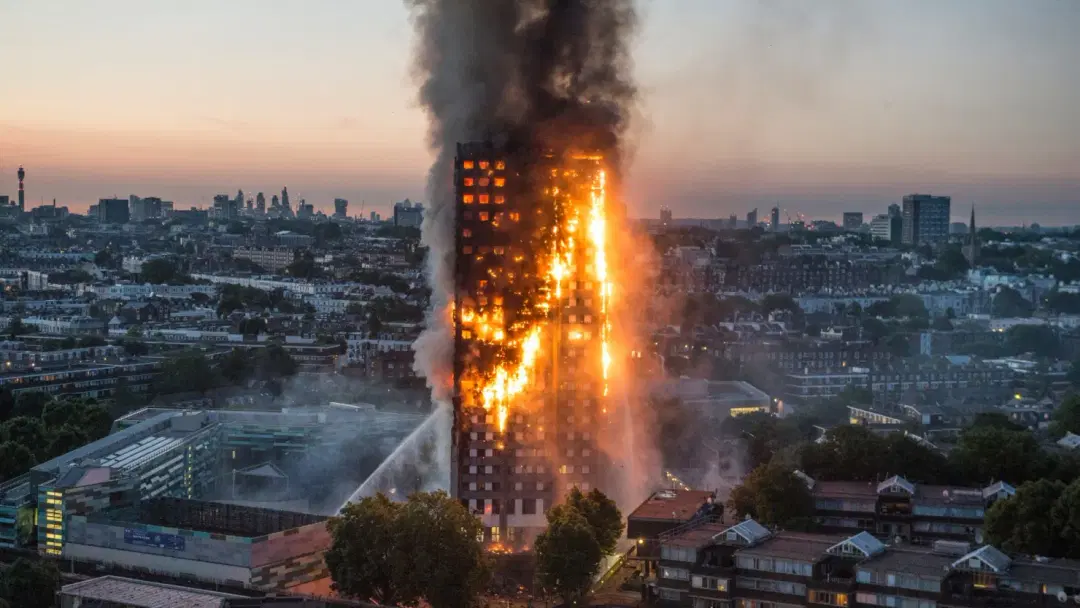
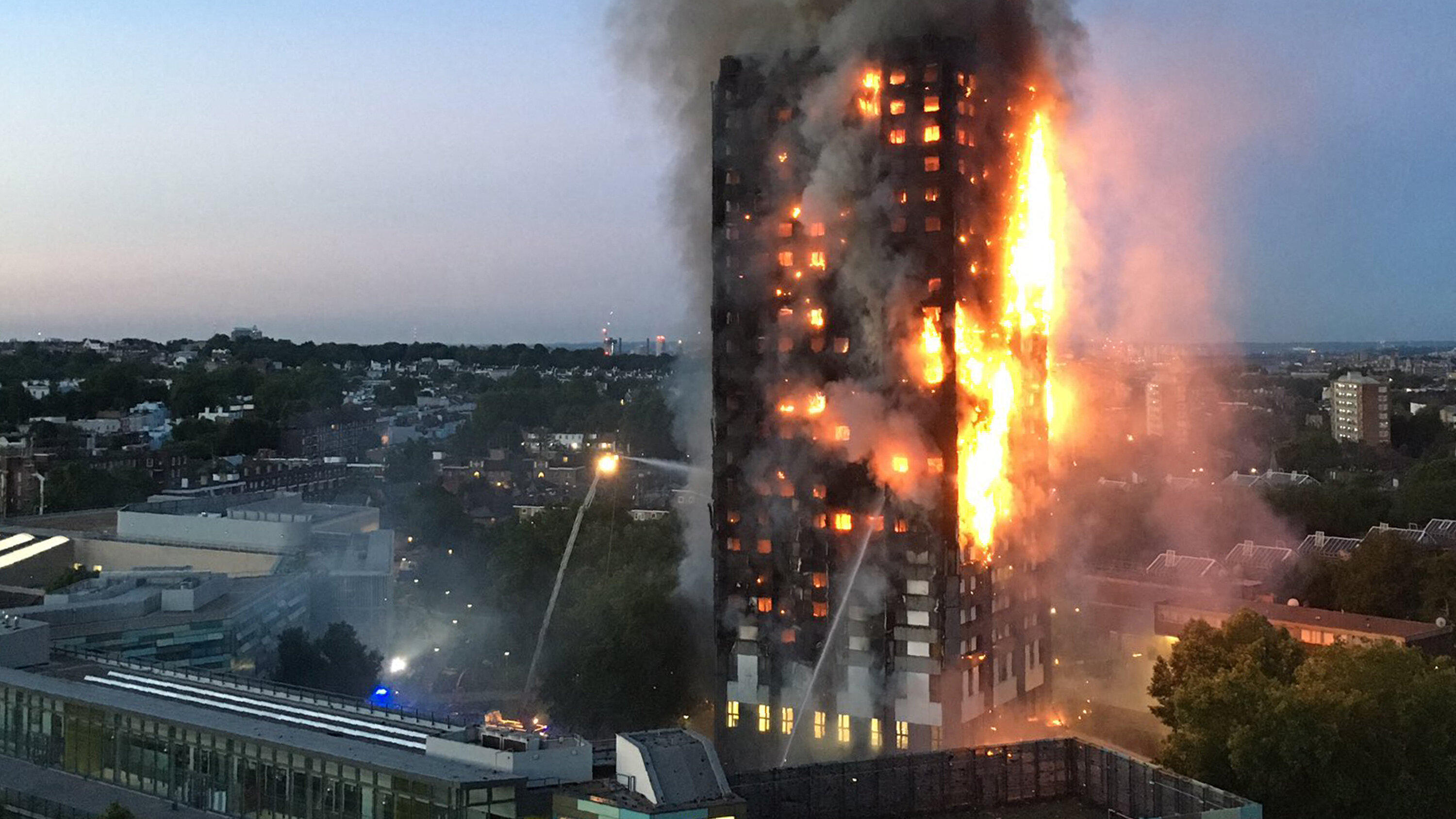
In contrast, the Grenfell Tower disaster in North Kensington, London, is one of the clearest recent examples of the lethal potential of combustible cladding. On 14 June 2017, a fire broke out in the kitchen of a fourth-floor flat in the 23-story block. Within minutes, flames had ignited the polyethylene-filled aluminum composite panels installed on the exterior of the building and raced up the outside of the structure. The fire spread both upward along the cladding tower columns and horizontally across the cladding positioned above and below the window panels. The flames spread across all four sides of the building and reached the top floors in less than 30 minutes. The combination of combustible cladding, combustible insulation materials, and uninterrupted vertical cavities created ideal conditions for extreme and rapid fire spread. Seventy-two people lost their lives as a result. The Grenfell Tower fire remains one of the deadliest residential building fires in modern British history.
Relevance and Implications
These cases highlight a broad global issue. Combustible cladding and other high-risk building materials continue to endanger occupants, yet regulation and remediation efforts remain inconsistent and slow. Fire authorities can prevent loss of life, as seen in Dubai, but they cannot shoulder the entire responsibility for managing the risks created by unsafe building materials. Governments and building owners must consider both life-safety measures and structural remediation when full removal of combustible materials is not immediately feasible. This includes the implementation of interim safety systems, improved evacuation planning, transparent public risk registers, and clear pathways for long-term façade replacement. Without such measures, a resident's chances of survival remain dependent on factors such as age, mobility, socioeconomic position, and the speed of an emergency response. Failing to address these vulnerabilities carries significant human and financial costs, and meaningful action is required to avoid further preventable disasters.
The tragedies in Hong Kong and the numerous cladding fires internationally reveal a consistent and preventable pattern. When combustible materials line the exterior of high-rise buildings, even a small ignition source can escalate into a disaster that exceeds evacuation and firefighting capabilities. Addressing this risk is both a safety imperative and a moral obligation. Without decisive action, many cities remain susceptible to fires that can cause extensive destruction and loss of life.